Civil Rights
Each of the following portfolios contain images of a related subject. Browse the thumbnail page, then click to see an enlarged image, caption, and licensing information.
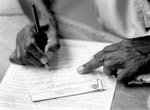
Voting Rights The pictures in this portfolio represent a structured narrative of progress toward black suffrage, beginning with examples of systematic exclusion of blacks from voter registration rolls and voter registration efforts in the face of this exclusion. more…
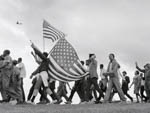
Selma to Montgomery March: Part I Most significant of all the civil rights demonstrations, the March and the events that gave rise to it. led directly to the Voting Rights Act of 1965. We've divided this collection of 150 images into three parts for faster loading. This section contains most general march pictures and many iconographic images. more…
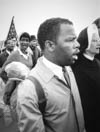
Selma to Montgomery March: Part II We've divided this collection of 150 images into three parts for faster loading. This section contains individual shots of civil rights leaders and personalities as well as many spectator pictures. more…
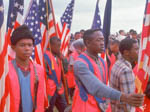
Selma to Montgomery March: Part III - color We've divided this collection of 150 images into three parts for faster loading. This section contains all march pictures in color. more…
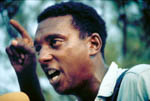
The Meredith March On June 6, 1966 James Meredith, the first black student to enroll at the University of Mississippi, began a solo March from Memphis south through Mississippi some 220 miles to Jackson to protest slow progress in voter registration and civil rights. On the second day Meredith was gunned down from ambush. He survived but was hospitalized. more…
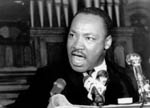
Martin Luther King "As you press on for justice, be sure to move with dignity and discipline, using only the weapons of love. Let no man pull you so low as to hate him. Always avoid violence. If you succumb to the temptation of using violence in your struggle unborn generations will be the recipients of a long and desolate night of bitterness, and your chief legacy to the future will be an endless reign of meaningless chaos." more…
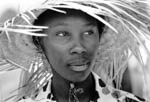
Black Lives, Portraits A selection of portraits showing the strength and vitality (as well as the poverty) of black citizens of the South. more…
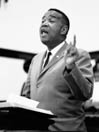
Black Lives, Church Black Churches were at the center of black community life in the South. Not only as places of worship, black churches were often the single institution where black people could give and receive the respect that was so frequently denied them by the outside world. This portfolio includes not only documentary photographs of a sharecroppers' church, but also attempts by black students to integrate a white church in Jackson, and photographs of churches as centers of civil rights protest. more…
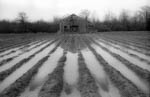
Black Lives, Rural Culture These are photographs of a rural life that is at least partly gone. more…
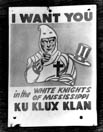
Black Lives, Brutality This file contains every negative reaction to Civil Rights. Note that not all pictures of police depict brutality; some police are merely enforcing order. more…
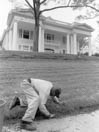
Black Lives, Labor The labor of black southerners fell generally into two categories: work done to sustain themselves and their families; and cheap labor that supported the privileged living standards of white southern society. more…
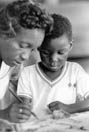
Black Lives, School Public schools for black children in the South were dismal places with inadequate facilities, underpaid teachers, a curriculum devoted to maintaining segregation, and harvest time "recesses" so that children could work in the fields. Civil rights groups responded with summer "Freedom" schools, and then federally funded Headstart classes. more…
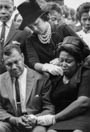
Birmingham Church Bombing On Sunday, September 17, 1963, Ku Klux Klansmen set off a large bomb near the basement of the 16th Street Baptist Church during Sunday service, killing four young girls. It was the most heinous in a long series of violent crimes against blacks. Pictures show damage, police action, civil rights movement reaction, and the funeral of three of the girls. more…
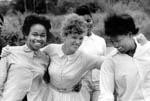
Mississippi Summer Project, 1964 Mississippi Freedom Summer. Civil rights leaders brought a thousand students from mostly Ivy League colleges into the state in the summer of 1964 to teach in Freedom Schools and do community organizing and voter registration. Pictures show Freedom School activity, the construction of a community center, voter registration, and other activities. more…
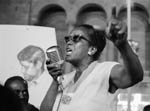
Mississippi Freedom Democratic Party The Mississippi Freedom Democratic Party (MFDP) was established in the spring of 1964 after it became clear that blacks would be excluded from voting or taking part in activities of the regular state Democratic Party. Following established practices, the MFDP elected it's own delegates to the Democratic Party Nominating Convention in Atlantic City, and mounted a powerful challenge to the seating of Mississippi Democrats. These pictures and accompanying text tell the story of that challenge. more…
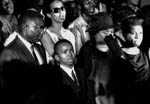
Klan Murders The murders were carried out in darkness and obscurity, and no direct photographs exist. This portfolio covers events related to the murders, including pictures of James Chaney's younger brother Ben as he tries to come to grips with his brother's death, the Chaney funeral in Medidian, and a memorial service that followed it at the site of the burned out Mt. Zion Baptist Church near Philadelphia Mississippi. Finally, there are pictures of a CORE memorial march and service a year later that began in Philadelphia and ended at the church site. more…
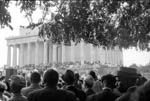
The March on Washington The March on Washington was the largest human rights demonstration in the history of the American republic. 300,000 people traveled to Washington on August 28, 1963 to demonstrate for jobs, voting rights and freedom. The 100 images in this folio encompass the pagentry and size of the event, as well as many wonderful human moments. more…
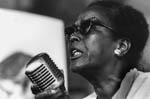
Civil Rights Movement Leaders Four organizations and their leaders dominated Civil Rights activities in the deep South during the 1960's: The Southern Christan Leadership Conference (SCLC) with Martin Luther King, The Student Non-Violent Coordinating Committee (SNCC), The Congress of Racial Equality (CORE), and The National Association for the Advancement of Colored People (NAACP). more…
Local Leaders Although seldom as well known as the leadership of the major Civil Rights organizations, the indigenous leaders (mostly black, but occasionally white) played a critical role in the growth of the Civil Rights movement. more…
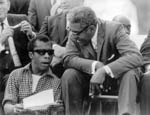
Supporters of the Civil Rights Movement Here you'll find images of a few of the hundreds of men and women who provided vital support and services to the Movement, either individually or through organizations that joined in the cause. more…
Portfolios Under Construction We are adding Civil Rights pictures as quickly as we can scan and caption them. Please check this page for future portfolios, which will include: Women; Headstart Schools; The Free Southern Theater; Meredith March; Other Marches; Black Culture; Black Living Conditions; Religion; Music & Soul; Southern City/Town/Landscapes; Icons of Segregation; White Culture; White Politics & Politicians.